About
Each course comes with a stimulating, relevant mix of lessons, resources and a real live instructor
Our course content is built with a combination of real work experiences, custom design and various models used by many professions across today’s workplace. The key word here is 'mix'.
Some courses started out as undergraduate lessons from universities and colleges in BC, AB and Yukon Territory. Other content stems from the International Association of Business Communicators and the Canadian Press Stylebook. There are also added layers from your instructor's 20+ years of work experience as a professional writer and communicator.
All courses feature Open Educational Resources (OER) and Open Textbooks along with other resources and learning activities. Learners will also be invited to a meet-up with the instructor who will go over lessons, materials and answer questions. This is a quick and effective way to learn and enjoy the experience at the same time.
Note: each six-week course is limited to 30 seats.
For faster access, join our wait list here.
Meet your instructor: Kate Hildebrandt
I have written and led communications projects for senior executives, government leaders, ad agencies and non-profits across Western Canada.
Within those 20+ years, I also taught professional writing and communications at Royal Roads University (Victoria, BC) and Grant MacEwan College (now a university in Edmonton, AB) and led workshops for various ministries with the Government of Alberta, City of Edmonton, and major corporate entities. I also worked at the University of Victoria for seven years as a communications professional and, previously, led a small team at an ad agency in Whitehorse, Yukon Territory.
I founded Kwriter Academy to share my working and teaching experiences with anyone who has successfully completed their grade 12 education. I offer five courses, each six weeks long, designed to offer the most current, relevant skill set for those wantiing to learn and improve their writing and communication skills in an effective and, on occasion, transformative manner.
My approach has been shaped by what the working world expects from a professional. Be prepared to learn about clarity, facts, research methods, strategy, planning, trends, standards including Canadian Press style and today's executive-level calibre of clear, creative form.
Kate
Linkedin profile | Why study with me? | How to get unstuck
20+ yrs of experience Award-winning work A free, quick lesson


We help you prepare
You will be gently oriented with our 'course-warming' session we host at the start of every course.
You will be provided with a course plan and calendar, a storyboard poster that shows the key learning process of the course, a list of Open textbooks and other Open Educational Resources along with a reading list. We will meet once a week for the full six weeks of your course. Attend if you wish. A recording will be made available. A community network is also established; we'll provide you with a link. You can also book one-on-one time with the instructor.

We preview assignments
Previous students have found this technique to be a great way to learn and to prepare.
All learners can submit assignments for feedback prior to the instructor formally assessing their work. The instructor offers notes on your assignment before filing that may lead to a more successful assessment of the learner's work.
This means the learner must submit their assignment for review one week prior to deadline. The instructor will send feedback to the learner three days before deadline. It is up to the learner to decide how to revise, rework or edit their assignment -- that's where the learning comes in -- and, without a doubt, the quality of your work, and your learning experience, will be enhanced.
Employers want skilled people like you
Employers strive to stay competitive, boost productivity and help employees learn professional skills and the latest digital tools.
The demand for employees with professional skills has never been greater, especially for those with the ability to write well and communicate effectively. Our free two-week micro course on Career Planning explains how to navigate your job hunt and pursue the career of your dreams alongside employer needs. Once completed, consider signing up for our Portfolio Website course. It's the natural next step to create a professional web-based portfolio, a process involving essential skills that can also help you bring your career plan to life.
Anyone can upskill and succeed
Self-learning is the new normal

New hire
You landed a new job! That's exciting. Your employer has established a specific writing style you must learn within your first three months on the job. It's challenging and you go home some days feeling exhausted. Our Professional Writing or Digital Writing courses can help you get through this phase with support and helpful resources you can keep for future reference.

New desire
Congratulations on becoming fluent in the English language and making Canada your new home. Welcome! You're looking for a course that fits your career plan on Digital Marketing. In addition to reading materials, resources, quizzes and testing, you will also be introduced to an online community for support and networking. Next up, consider Digital Writing.

New grad
After four years of study, it's time for the grand transition. In the working world, most business and government professionals follow the The Canadian Press Style, not APA as used in academia. We can help you with that in our Professional Writing program which includes a strong focus on critical thinking skills. Learn the clear, rational process of analyzing information before forming a belief.

New dad
You have a family now and can't shake the idea of advancing at work after you saw that posting for a new senior role. You want to apply but wonder if your skill set needs a refresh. Enroll in our six week course on Strategic Communications. We'll teach you the latest on goal-setting and analytics for measuring communication outcomes. Prepare to wow HRt and the boss!
New grad
After four years of study, it's time for the grand transition. In the working world, most business and government professionals follow the The Canadian Press Style, not APA as used in academia. We can help you with that in our Professional Writing program which includes a strong focus on critical thinking skills. Learn the clear, rational process of analyzing information before forming a belief.
New dad
You have a family now and can't shake the idea of advancing at work after you saw that posting for a new senior role. You want to apply but wonder if your skill set needs a refresh. Enroll in our six week course on Strategic Communications. We'll teach you the latest on goal-setting and analytics for measuring communication outcomes. Prepare to wow HRt and the boss!
Learners share similar goals around upskilling
Employment is a key driver behind the quest for skills development
- Canadian students are increasingly stepping beyond the classroom to build the skills and confidence they need for the future, according to a new CIBC poll (Aug.24, 2029): As they navigate an uncertain job market, many students are taking a pragmatic and proactive approach to career preparation, with two thirds (66 per cent) pursuing learning or skills development outside of their formal education to strengthen their career prospects and ambitions.
- The AI and digital shift: Workers want to learn about data analysis, cybersecurity and basic A.I. tools. Across all sectors, according to a recent report by the Conference Board of Canada and the Future Skills Centre, basic digital skills are becoming insufficient — as even previously lower-tech industries like construction and retail undergo digital transformations.
- Upskilling within the Canadian workforce is still a work in progress. As Statistics Canada data shows, 56% of Canadian businesses reported that their overall workforce was not fully proficient enough to perform their job at the required level in 2021. The prevalence of workforce skills gaps increased to nearly 74% for small businesses.
- Generational habits: Younger workers view self-learning as the new normal. Government and corporate backing like Upskill Canada support fast-track certificate programs for data science, machine learning and tech sectors.
Skills for Success
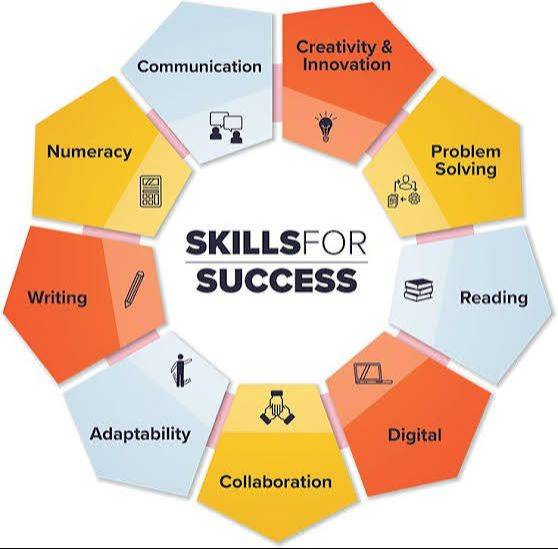
Identified and launched by the Government of Canada, Skills for Success offers an outline of our evolving labour market. These nine skills, as shown below, reflect changing needs and requirements. Our course content is in step with today’s workplace and focused on these key skills because employers seek these skills in new hires.
Check out OASIS - Canada's Occupational and Skills Information System. Explore the skills, abilities, personal attributes, knowledge and interests typically required for 900 Canadian occupations.
Sources
- Skills for Jobs Canada, Skills for Success, Skills Canada
- U of T, Data Sciences Centre
- YouTube - BetaKit
Canada's employers look for these skills
Our course content is in step with these nine Skills for Success required in today’s workplace, as research shows these are the top skills employers seek in new hires. What's more, these skills align with each of our courses in a mix of different ways. Check out the section below.
Take a look at this one-minute video from the Government of Canada explaining why these skills are so valuable.
The Skills for Success you'll learn in each course
|
Course |
Assignment |
Skills |
|
Professional Writing |
Clear, conclusion-first business report |
Writing, reading, numeracy, problem-solving, creativity and innovation. |
|
Strategic Communications |
Collaborative multi-channel |
Communication, collaboration, adaptability, numeracy, (budgeting and measuring analytics) and innovation. |
|
Digital Marketing |
Data-driven ad campaign brief |
Digital, creativity, innovation, numeracy, creativity and innovation. |
|
Portfolio Development |
Capstone personal branding and website creation Data-driven ad campaign brief
|
All nine skills reading are learned by reading reflective case studies and taking notes. Numeracy, problem-solving, writing, communication, adaptability (as in the ability to adjust to highly structured limitations), creativity and innovation.
|